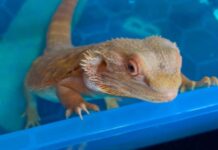
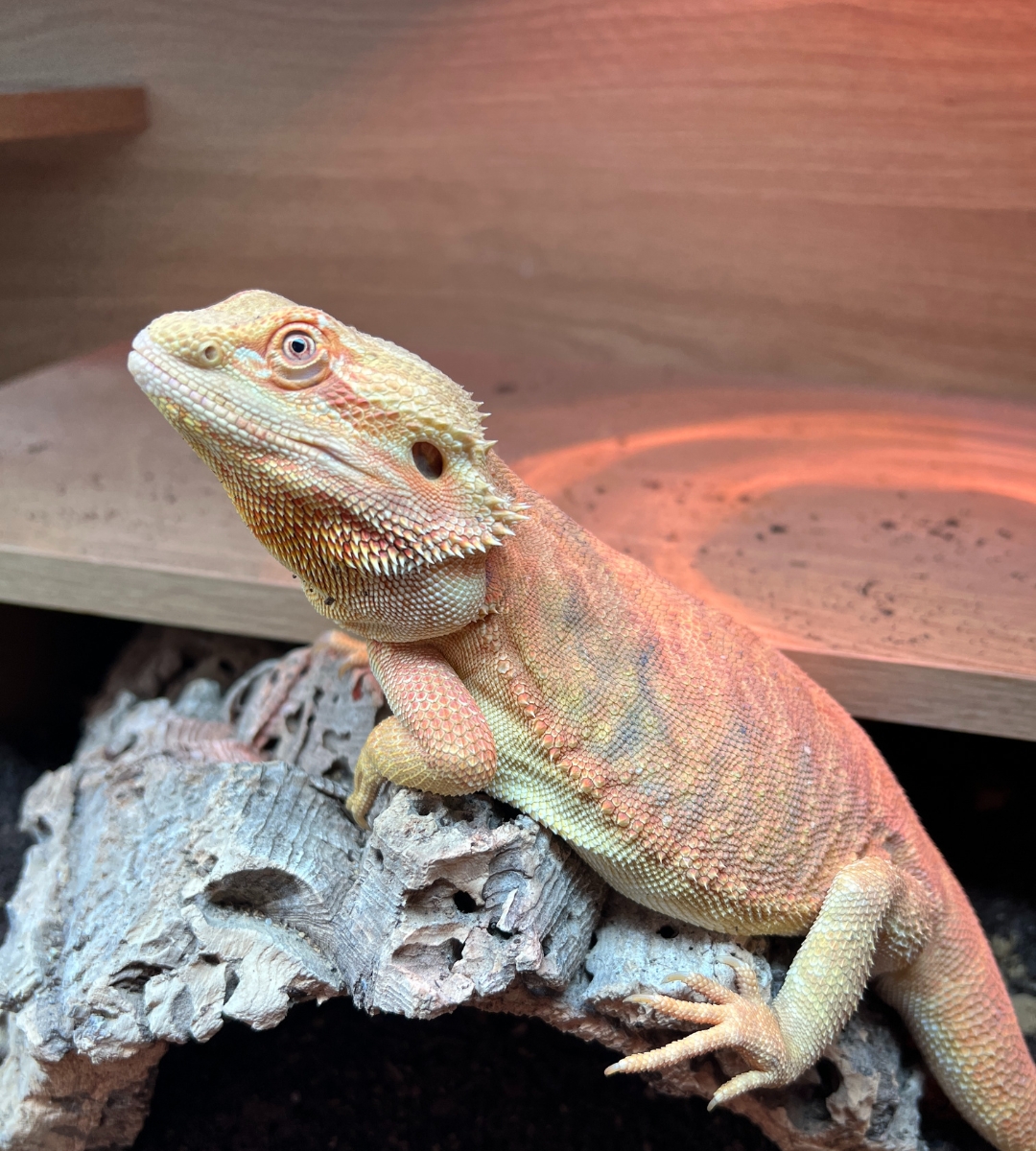
This morning didn’t start well. I woke up to my husband telling me in hushed, worried tones that there was something wrong with our bearded dragon, Jelly. She’d thrown up in the night and was not responsive when he checked on her.
As any exotic pet owner knows, reptile vets are hard to find. I called the most recent practice I’d used, only to be told they no longer had an exotic vet at the practice. But they knew another exotic vet, who just happened to work at the practice near my old house. Perfect!
I am overly cautious when using reptile vets, as I have found in the past that sometimes they are more ‘vets who will see reptiles’ than ‘vets who have a decent knowledge of reptiles’. Fortunately, this vet was the top tier of reptile vets. He was an ex-zoo vet, he keeps reptiles himself and has done so for decades, and I was immediately put at ease by how he handled my beardie and the level of knowledge he had.
But things went downhill in an unexpected way from there.
Jelly herself appeared to have no signs of impaction, was more alert than she’d been that morning, and her mouth wasn’t showing any signs of a respiratory infection. But that wasn’t the relief I was hoping for, as the vet told me about two much bigger issues that are currently causing carnage in the bearded dragon world.
Atadenovirus
Atadenovirus is causing a huge problem in places where more than one bearded dragon is kept together. I only have one bearded dragon, but I do have a lot of other reptiles, and as the vet pointed out, viruses mutate so it isn’t a guarantee that having no other bearded dragons on the property will have kept her safe.
This virus has no cure, you can only potentially treat the symptoms to attempt to prolong life. Not something you want in your reptile friendly home. If Jelly doesn’t recover over the next few days she will need blood tests to see if this is the cause.
Now, I wasn’t aware of atadenovirus specifically, but viral causes had of course crossed my mind when I was driving her to the veterinarian. The thing that hadn’t occurred to me, was stomach cancer.
Stomach Cancer
This was the real worry, on so many levels. Apparently stomach cancer is soaring in bearded dragons. Now being an animal nerd, I’m aware that cancers often become common in species, or breeds, due to line breeding. Jelly is a high orange bearded dragon, a line bred trait that means to get that color she probably has a few relatives in common on either side of the family tree. But whilst the vet agreed this could increase her chances, he felt that this was a much wider issue for our captive bearded dragons. The gene pool is simply too small to cope.
Coefficients of Inbreeding
There is a way of measuring and defining how inbred certain animals are, and the term for that is coefficient of inbreeding. Some breeds of dog for example have awful coefficients of inbreeding because they only have a few members of the breed in the country at any one time, so sisters get mated to brothers, uncles to their nieces, and similar sketchy combinations. For bearded dragons, this situation is potentially in dire straits.
Not only do the reptile community at large tend not to worry as much about inbreeding as mammal keepers, as they are lulled into a false sense of security by the lack of obvious immediate defects, but the raw numbers of bearded dragons being bred here are low. And there is little possibility for resolving this throughout Europe, unless Australia suddenly decide to open their doors to wild exports again.
So where does that leave us?
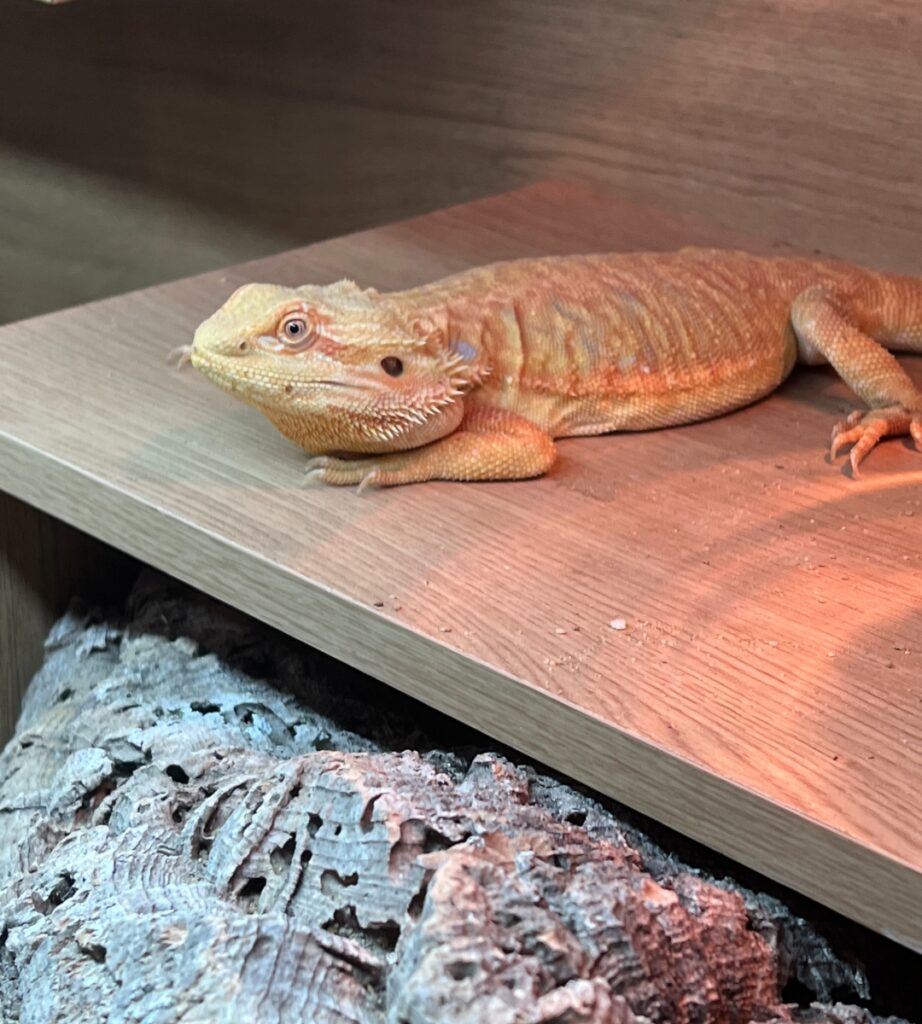
Well, for Jelly specifically things are looking okay. Hopefully, she just had a case of eating a bad morio worm and will perk up from here. But I will be watching her like a hawk over the next few weeks, and will keep my new reptile vet on speed dial for the foreseeable. If he doesn’t seem better in a couple of days they’ll do some x-rays and take some bloods and we’ll go from there.
But bearded dragons in the UK in general? For them, as our pets, I don’t feel so optimistic. This limited gene pool is not going to get any bigger. Maybe we can set up a breeding register for beardies to try to improve the coefficient of inbreeding, or look at more imports at least from elsewhere in Europe, or maybe even lobby Australia for a few hundred wild caught bearded dragons, but I’m pretty sure I’m not in the position to make even the easiest of those things a reality.
Hopefully I am disasterising here, but it’s a real worry. I would love to hear your thoughts, so please do share them in the comments section. If there is anything we can do to improve our captive bred bearded dragon’s line-breeding disaster, I’m all ears!